The best of all the time management tips I've been given is also the rudest-sounding: put your own appointments in the calendar first, before anybody else gets a pen near it. The work that matters, the rest, the people you love. They go in, in ink, and everything else is arranged around them. Every other piece of advice about calendar management is a footnote to that.
House rule 51 is short: "Whoever controls your calendar controls your life. I control mine." I didn't always. For a long stretch of my twenties my hours weren't my own in any sense. I had to account for them to a man who checked, and who made sure I understood that my time, like everything else, belonged to the household he ran. When I left, one of the first things I bought, before a proper coat, was a small black diary. I wrote my own name in the front. I remember the pen.
And yet, when I started my own business years later, I did something almost as foolish. I let other people fill the diary instead of him. Anyone who asked for an hour got one. I thought a crowded week proved I was important. It proved I was available, which is a different thing and pays much worse.
The turn came with a telephone call on a Wednesday. A man whose business I badly wanted rang to say he needed to see me on Friday afternoon. Friday afternoon was the one block I had fenced off for myself: three hours to think and read my own figures without interruption. I had never once kept it. I heard myself say, "I can't do Friday. I could see you on Monday at ten." There was a silence on the line of the kind that makes your stomach fold. "Surely you can move it," he said.
I'll tell you what happened. First, the rules I've kept since.
1. Your own appointments go in first
On Sunday, before the week begins, put in the three or four things that will make it a good week by your own measure. Not a list of tasks: appointments, with times, as if you were meeting someone you respect. Tuesday, eight to ten, the proposal. Thursday, seven o'clock, dinner with my sister. Saturday morning, nothing whatsoever.
Then, when someone asks for Tuesday at nine, you are not lying when you say you're taken. You are.
This feels selfish the first few times, and people who were raised to be useful feel it most. But think about what the alternative actually is. A diary filled by other people is a very polite way of being told what to do. Every one of those requests was reasonable on its own; together they add up to a life arranged by committee, and you are the only member who wasn't consulted.
2. The first hour belongs to you
Rule 52 is about the morning, and it means exactly what it says: the first hour decides what the rest of the day will cost you. Whatever you give that hour to sets the tone for everything after it. If you give it to other people's messages, you spend the rest of the day answering. If you give it to yourself, even ten minutes of it with a pen and a cup of tea, you begin the day as the person deciding.
In my house it looks like a kettle, a fountain pen and the curtains open before the laptop is. My mornings, minute by minute, are nothing you couldn't copy by Thursday. The only unusual thing about that hour is that nobody else can book it.
3. Never say yes on the spot
Most calendars are ruined in the corridor. Somebody asks, you are caught off guard, you want to be agreeable, and the word is out before your brain has checked the week. Teach yourself one sentence and use it until it's automatic:
"Let me look at my diary and come back to you by tomorrow."
I learned the value of that sentence the hard way. At a fundraising lunch, years ago, a woman I admired caught me by the lift and asked whether I might "just help a little with the raffle." I said yes before the doors had closed. The little help was nine Saturday mornings in a church hall counting tickets, and on the seventh I was so tired and so resentful that I snapped at a volunteer who had done nothing wrong except be cheerful at eight in the morning. I apologised to her. I also learned that my yes had never been generosity. It was the fear of disappointing someone in a lift.
The sentence is not a refusal, it's a pause. And in that pause you can ask the only question that matters: if I say yes to this, what am I saying no to? Sometimes the answer is nothing, and you say yes happily. Often it's the Friday afternoon.
4. Refuse in one sentence, with one alternative
When the answer is no, keep it short. "I can't do Thursday. I could do the following Tuesday at ten." No explanation of why Thursday is impossible, no apology for having a life. The more reasons you give, the more reasons they have to argue with, and suddenly you're negotiating over your own evening.
Over-explaining is a habit with its own cure, and its own scripts, and the calendar is where it costs the most: every refusal padded with three reasons tends to end, twenty minutes later, in a yes you didn't mean.
5. Every meeting gets an ending before it begins
Meetings expand to fill whatever is not defended. When you arrange one, arrange its end: "Shall we say eleven until half past?" When you arrive, say it again, lightly: "I've got until half past. Shall we start with the budget, so we're sure to cover it?"
People are not offended by this. They are relieved. Somebody has finally said what everyone was thinking, and the meeting that would have wandered for ninety minutes is over in thirty with more decided in it.
6. Leave empty space, on purpose
A diary packed edge to edge looks efficient and behaves like a house of cards. One late train, one call that runs over, and the whole afternoon falls in on itself, and by four o'clock you are apologising in doorways, arriving flushed, making everyone after you late in turn.
Leave fifteen minutes between things. Leave one half-day a week with nothing booked. You will always fill it, because something unexpected always comes. The difference is that you'll fill it calmly. Study anyone who never seems to be in a hurry and you'll find the same unglamorous secret written into their week: gaps.
7. Treat other people's time as though it were yours
One of my Time rules calls lateness a kind of theft with good manners on top, and I've never softened my view. This is the other half of controlling your calendar, and it's the half people skip. If your time is precious, so is theirs. Arrive when you said. Cancel early or not at all. If you book an hour of someone's day, give them an end time and keep to it. When you do run late, send word before the appointment, not after it.
Something shifts once you keep other people's hours carefully. They stop assuming yours are negotiable. The practical side of punctuality (the clocks, the leaving time, the fifteen minutes nobody budgets for) has had its own piece; the one thing I'd add is that the most punctual people I know aren't rigid at all. They leave more room than you do.
8. Look at the week every Sunday
Ten minutes, on Sunday evening, with the coming week open in front of you. Go through each entry and ask one quiet question: did I choose this, or did it happen to me?
You won't be able to cancel everything that happened to you, and you shouldn't try. But you'll start to notice the patterns. The weekly call that could be a monthly one. The lunch you have kept up for four years out of politeness with someone who drains you. The evening you've given away three weeks running. You can't control your schedule until you can see it, and most people never look.
The first time I did this properly, I found a lunch that had been in my diary on the second Thursday of every month for three years. It was with a man who had once been useful to me and who now spent each lunch telling me what was wrong with his staff and, before the soup had cooled, with the waiter. I had never once asked myself whether I wanted to go. I didn't cancel it dramatically. I simply didn't suggest the next one, and neither did he, which told me everything about how much he'd been enjoying it.
9. Rest goes in, in ink
House rule 58: "Treat rest as a reward and you'll never earn quite enough of it." Rest that is waiting to be earned never arrives, because there is always one more thing. So it goes in the calendar like anything else, with a start and an end, and it is not the first thing you cancel when the week gets crowded. It's the last.
I used to think the people who guarded their Saturdays were lazy. I thought that for a good ten years. Then I watched who was still sharp at the end of a long negotiation, and who had started making small, tired mistakes, and I changed my mind.
10. Nobody else's urgency is automatically your emergency
You will be told, often, that something must happen today. Sometimes that's true. More often it means someone else failed to plan and would like to borrow your calm. You can help without surrendering your day: "I can't look at it this afternoon. I'll have it back to you by ten tomorrow." Say it kindly, and then do what you promised by ten tomorrow, which is what makes the sentence believable the next time.
Time management tips only work if you try one
You've just read ten, and I know exactly what happens now, because I've done it myself with other people's advice. You'll agree with most of them, try none, and your calendar will look the same on Monday.
So don't try ten. Try one, for seven nights. Each evening before bed, write down tomorrow's first appointment with yourself, with a time next to it, before you look at anything anyone else has put there. Then keep it the next day, however small it is. Twenty minutes to read. Half an hour on the thing you keep postponing. A walk at lunch with your phone left in the drawer.
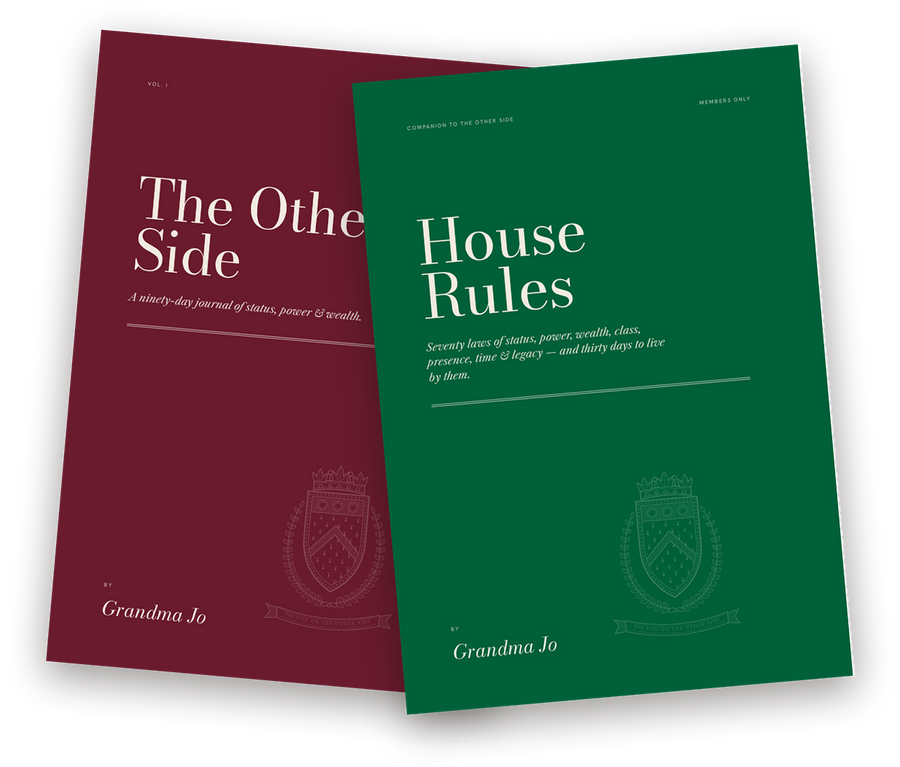
I built a line for exactly this into The Other Side. It's called Tomorrow, you fill it in at bedtime, and it takes about as long as brushing your teeth. Keep rule 51 for seven nights. If it earns its place, it has nine brothers and sisters under Time in House Rules, and six more pillars' worth after that. The Full House is how I'd keep the whole family within reach.
There's no clever system here. It's the same small refusal, repeated, until the calendar starts to look like it belongs to the person whose name is in the front.
As for the man who wanted my Friday: he took Monday at ten, and he stayed a client for fourteen years.